
"early Chinese coffee"
2000 article(s) found

History of introduction and expansion of Coffee in early China (1)
1. The introduction of Ruili Jingpo Nongxian Coffee was recorded in 1914. In April 1996, it was compiled by the compilation Committee of Ruili City Chronicles of Yunnan Province. The fifth coffee section on page 383 of Ruili City Chronicles published by Sichuan Dictionary Publishing House recorded that as early as 1914, the Jingpo people have been introduced from Myanmar to Nongxian Township for cultivation. Yunnan Provincial Chronicles, Volume 39, Chapter 3 of the Local Series of the people's Republic of China

CAFFE PASCUCCI Cafe has quietly completed the layout of Beijing, Guangzhou and Shenzhen in the Chinese market.
CAFFE PASCUCCI, a luxury coffee brand unknown to most Chinese (very popular in Europe above middle class), was founded in 1883, spanning more than a century, and is known as the ingenious aristocrat of the coffee industry. In Italy, Starbucks is really distressed in the face of inaccessible markets, unconquerable customers and unbeatable predecessors. CAFFE PASCUC

Is instant coffee representative of the third coffee wave?
As early as after the First World War (1914~1918), there was a sharp increase in coffee consumption in Europe and the United States, but the scale of the war was far less than that of World War II, so the power to boost coffee demand was weak. More importantly, the technology of instant coffee production did not mature until after World War II. Officers and soldiers who contracted coffee addiction on the battlefield and returned to their fields became instant coffee after the war.

Authentic Blue Mountain Coffee beans recommended by Jamaica Coffee Association
Friends in China always complain that they can't drink real Blue Mountain Coffee and authentic Blue Mountain Coffee. In fact, as early as 2005, the real Blue Mountain Coffee entered the Chinese market on a large scale and entered high-end shopping malls, but little was known about it. The famous Jamaican JABLUM Blue Mountain Coffee (Jablum Blue Mountain Coffee) teamed up with Jablum Blue Mountain Coffee manufacturer to buy it.
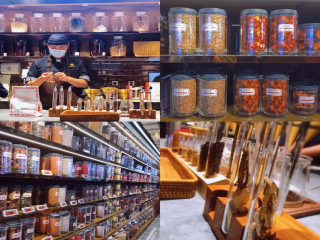
Punk health coffee tailor-made for social animals! Tongrentang Health launched Chinese wolfberry latte, orange peel hand flush and Luohanguo American style.
Traditional Chinese medicine with coffee, hot search again! Poria peel, Codonopsis pilosula, andrographis paniculata. You think you're cooking traditional Chinese medicine? No, it's not! I'm making coffee! What is recommended by the majority of netizens this time is a Chinese wolfberry latte. Lily, Polygonatum odoratum, nourishing yin and moistening dryness, Chinese wolfberry pulp nourishing liver and kidney, protecting liver and eyesight, is a necessary coffee for social animals in autumn and winter

Brief introduction of Nestle Coffee Brand
Nestle Coffee Nestle Coffee originated in 1930. When the Brazilian government came into contact with Nestl é, coffee authority Max Morgentel immediately set out with his research team to develop a way to mix with water while maintaining the original flavor of the coffee juice. After seven years of research in a Swiss laboratory, they finally found the answer. Nestle Coffee is now known all over the world.
The History of Coffee introduction and expansion in China in the early stage (1)
1. The introduction of Ruili Jingpo Nongxian Coffee was recorded in 1914. In April 1996, it was compiled by the compilation Committee of Ruili City Chronicles of Yunnan Province. The fifth coffee section on page 383 of Ruili City Chronicles published by Sichuan Dictionary Publishing House recorded that as early as 1914, the Jingpo people have been introduced from Myanmar to Nongxian Township for cultivation. Yunnan Provincial Chronicles, Volume 39, Chapter 3 of the Local Series of the people's Republic of China

Starbucks' Global Coffee Culture
Starbucks always emphasizes culture, but culture can attract people who are open and curious, and it can also be opposed by conservative and stubborn people. When Starbucks extends its "coffee culture" to the world, it is bound to have a fierce collision with many different cultures around the world.

The different meaning of Xinglong Coffee
In the early 1950s, the first batch of returned overseas Chinese came to Xinglong ruins on the banks of the Sun River in Wanning. They pioneered planting and built Xinglong farmers.
Baristas from both sides of the Chinese coffee market exchange in Taiwan
(reporter Qian Lingling, correspondent Lu Yue) recently, under the leadership of the Xiamen Federation of Trade unions, elites of the Xiamen coffee roasting industry went to Taiwan for a week-long technical exchange. The Taiwan Coffee Industry Association arranged for senior coffee roasters to roast coffee beans on the spot for the exchange group and explain the essentials. Mainland baristas have also demonstrated their superb skills. Industry experts in the mainland pointed out that

History of introduction and expansion of Coffee in China in the early stage of Coffee Development (1)
1. The introduction of Ruili Jingpo Nongxian Coffee was recorded in 1914. In April 1996, it was compiled by the compilation Committee of Ruili City Chronicles of Yunnan Province. The fifth coffee section on page 383 of Ruili City Chronicles published by Sichuan Dictionary Publishing House recorded that as early as 1914, the Jingpo people have been introduced from Myanmar to Nongxian Township for cultivation. Yunnan Provincial Chronicles, Volume 39, Chapter 3 of the Local Series of the people's Republic of China

The earliest Coffee in China Coffee Origin in China
Coffee from accidental discovery by sheep, to the popularity of the world, generations, stories, all amazing. As early as the late Qing Dynasty in China, coffee was also widely spread by the literati at that time. In the late Qing Dynasty, at the turn of the century, coffee appeared in the coastal city of Shanghai. The first person to come into contact with coffee drinks was the literati in Shanghai at the end of the Qing Dynasty.

Explore the independent coffee shop in Mudu and savor the life of petty bourgeoisie in Shanghai
The exchange of professional baristas please follow the coffee workshop (Wechat official account cafe_style) Shanghai petty bourgeoisie is knowledgeable, pay attention to taste in life, dress in style, eat exquisite, play to choose special, like to go to bookstores and art parks, the pursuit of taste and flavor, rather than simply stacked with money Tuhao brand. As early as the 1920s, rich ladies in Shanghai lived a life of taste.
Coffee culture in Southeast Asia
I don't know how you are in other parts of Southeast Asia, but I am always at a loss on the streets of Singapore, on the corner of Vietnam and on a sign in Malaysia. Although transliteration of things like coffee was widely used by clever ancestors in the early years of its spread, there is not much audio-visual barrier, even though Singaporeans always refer to coffee as Kopi, which is pronounced from Hokkienese.

Hassanda Coffee Garden, Ecuador Coffee Fine Coffee Bean producing area planting varieties, climate, altitude environment is simple
Bananas, cocoa, coffee, cotton and other products from all over the country are collected and distributed here. Guayaquil has also played an important role in the history of friendly exchanges between the peoples of China and Ecuador. As early as the 18th century, Chinese clothing, textiles and other goods were shipped to Ecuadorian cities through Guayaquil. In August 1978, the Chinese cargo ship Jialing Jiang arrived here for the first time. The two countries

Introduction of Chinese Coffee beans the characteristics of Hainan Coffee Hainan Coffee
White jade carved green leaves, coral beads United, braving the rain to see the coffee, lingering can not bear to return. The flowers often bring rain, and the smell is as strong as milk. The mountain birds call at night and pick up fallen pearls in the Ming Dynasty. This is a "Bodhisattva Man" depicting the coffee garden. Anyone who has been to the coffee garden will applaud the author's poem. The scenery of the coffee garden on Hainan Island is charming, and the coffee produced in Hainan Island is also fragrant.

Changping Coffee Culture in Southeast Asia
I don't know how you are in other parts of Southeast Asia, but I am always at a loss on the streets of Singapore, on the corner of Vietnam and on a sign in Malaysia. Although transliteration of things like coffee was widely used by clever ancestors in the early years of its spread, there is not much audio-visual barrier, even though Singaporeans always refer to coffee as Kopi, which is pronounced from Hokkienese.
Coffee from abroad to China
Coffee originated in foreign countries. In the early days, only some wealthy middle-class or above families could afford it. It was only in the last century that coffee became popular in our country.

A letter from Starbucks to its Chinese partner in 2023: China will become Starbucks' largest market
Professional coffee knowledge exchange more coffee bean information please follow the coffee workshop (Wechat official account cafe_style) more boutique coffee beans please add private Wechat Qianjie coffee, WeChat: qjcoffeex today, Starbucks interim CEO Howard Schultz announced the New year to his Chinese partners on the official website.